 Skip to content

Blogs
 MTI Instruments’ PBS-4100+ Series Training Eligible for FAA Training Credit Gallery
MTI Instruments’ PBS-4100+ Series Training Eligible for FAA Training Credit
Brand-MTI, Industry-Aerospace, Industry-Government/Military, News-MTI, News-MTI-PBS, News-Products, Press Releases-Vitrek, Products-MTI-Engine Balancing, Z-REPUB, z1
MTI Instruments’ PBS-4100+ Series Training Eligible for FAA Training Credit
MTI Instruments' PBS-4100+ Series Training Now Eligible for Credit Under William (Bill) O'Brien Aviation Maintenance Technician (AMT) Awards Program ALBANY, N.Y., Feb. 23, 2021 /PRNewswire/ -- MTI Instruments, Inc. (MTI Instruments), a wholly-owned subsidiary of Mechanical Technology, Incorporated (OTCQB:MKTY), today announced that its training course on the PBS-4100+ engine vibration measurement and balancing system is now credit-eligible under the Federal Aviation Administration's (FAA's) William (Bill) O'Brien Aviation Maintenance Technician (AMT) Awards Program. With the new credit designation, MTI Instrument's course, "Vibration Analysis and Engine Balancing Using the PBS-4100 System," can earn an eligible individual up to 16 hours of credit towards AMT Awards issued through the FAA [...]
Nuclear Reactor Tube Testing
Nuclear Reactor Tube Testing Customer Case The customer needs to test specialized alloy tubing used to carry water within a nuclear reactor for possible damage. This tubing is located in a closed area where there is ambient radiation. Therefore, this test will be performed by a robot arm using ultrasonic non-destructive testing. They need to sample at 500 MHz on a single channel and save 2,000 samples for each acquisition at a Pulse Repeat Frequency (PRF) of 20 KHz. The ultrasonic transducer generates an ultrasound signal at 10 MHz. They must continuously capture a minimum of 500,000 records, which [...]
Radar Altimeter
Radar Altimeter Customer Case In this RADAR application the customer has pulses coming in at 1660 Hz. For every pulse they need to capture 500 samples which, at that rate, will amount to 1.7 Megs of data every second. The experiment will be running for at least a few minutes. They would then like to log all the captured data to the PC host memory. The final requirement is for the system to be on the PCI bus. By having the system on the PCI bus, the customer can stream the data directly to the PC's memory, which is [...]
 Wafer Backgrinding and Semiconductor Thickness Measurements Gallery
Wafer Backgrinding and Semiconductor Thickness Measurements
Application Notes-MTI, Brand-MTI, Industry-Compliance Testing, Industry-Consumer Products, Industry-Electronics, Industry-Manufacturing, Industry-Semiconductor, Industry-Semiconductor-MTI, News-MTI-Instrumentation, News-MTI-Metrology, Products-MTI-Capacitance, Products-MTI-Semiconductor/Metrology, Z-REPUB, z1
Wafer Backgrinding and Semiconductor Thickness Measurements
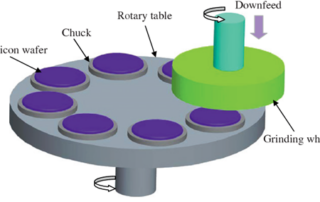
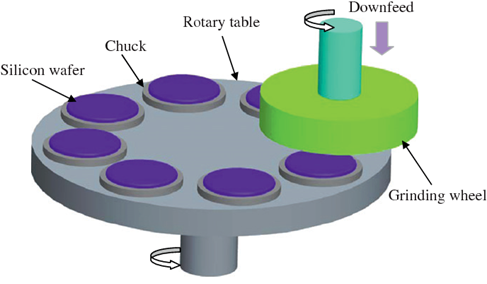
Wafer backgrinding is the first step in semiconductor packaging, the process of encasing one or more discrete semiconductor devices or integrated circuits (IC) for protection. Known also as wafer thinning or wafer lapping, backgrinding reduces wafer thickness to allow stacking and high-density IC packaging. Wafer thickness also determines package height, an important consideration as smartphones, laptops, and other electronic devices become thinner. With MEMS, wafer thinning also controls the proof mass for devices such as accelerometers or the diaphragm thickness for pressure sensors. Etching the surface of the wafer produces the IC but grinding the backside is what produces [...]
Ultra High-Speed Radar
Ultra High-Speed Radar Customer Case This application requires the acquisition of very fast analog signals at relatively slow sample rates for a long period of time. In other words, the input bandwidth requirement is very high (1 GHz), but the sampling rate needs to be no more than 5 or 6 MSPS. The most important requirement is that the acquisition must go on, without any breaks, for many hours. The customer does not need very high dynamic range. In fact, a 4-bit A/D converter will be sufficient. The customer has already identified a 4-bit A/D chip from TRW which [...]
Radar Rackmount System for Large Record Lengths
Radar Rackmount System for Large Record Lengths Customer Case The customer needs to acquire data from his radar system at a sampling rate of 1.5 MSPS for two channels (I & Q). At the moment, this data must be acquired for at least 10 seconds, but the record length may increase by almost 100 times in the future. This equipment needs to be installed in a rackmounted environment, so the host computer must have rackmount capability. An integrated monitor is also important as it eliminates the need to purchase a rack-mounted monitor. Keyboard and mouse must also be rackmountable. [...]
Interfacing to Offset IF Radar Altimeter
Interfacing to Offset IF Radar Altimeter Customer Case The customer is using an offset IF radar to map forest terrain density. The equipment will be mounted in an aircraft, which will also be carrying a Global Positioning System (GPS) for reference. The plane will fly at an altitude of 10,000 feet. A 512 ns radar pulse will be sent out and a return pulse will be received about 20 uS later, from which 10,000 samples will be acquired. After the pulse is received, there will be a relatively long re-arm time of about 250 to 300 uS for the [...]
 Silicon Carbide vs. Silicon in EV Power Electronics Gallery
Silicon Carbide vs. Silicon in EV Power Electronics
Application Notes-MTI, Brand-MTI, Industry-Automotive, Industry-Battery, Industry-Compliance Testing, Industry-Consumer Products, Industry-Electronics, Industry-Government/Military, Industry-Manufacturing, Industry-R&D, News-MTI-Instrumentation, Products-MTI-Capacitance, Z-REPUB, z1
Silicon Carbide vs. Silicon in EV Power Electronics
Compare silicon carbide vs. silicon for electric vehicle (EV) power electronics and learn about SiC wafer measurement. As demand for electric vehicles (EVs) continues to grow, manufacturers are comparing two semiconductor technologies, silicon carbide and silicon, for power electronics applications. Silicon carbide (SiC) provides the high temperature resistance, low power consumption, rigidity, and support for smaller, thinner designs that EV power electronics need. Examples of SiC’s current applications include on-board DC/DC converters, off-board DC fast chargers, on-board battery chargers, EV powertrains, and automotive lighting for LEDs. According to Automotive World, SiC technology could also drive future EV innovations [...]


Press Release: Vitrek Highlights Updated & Expanded Sections of their Website
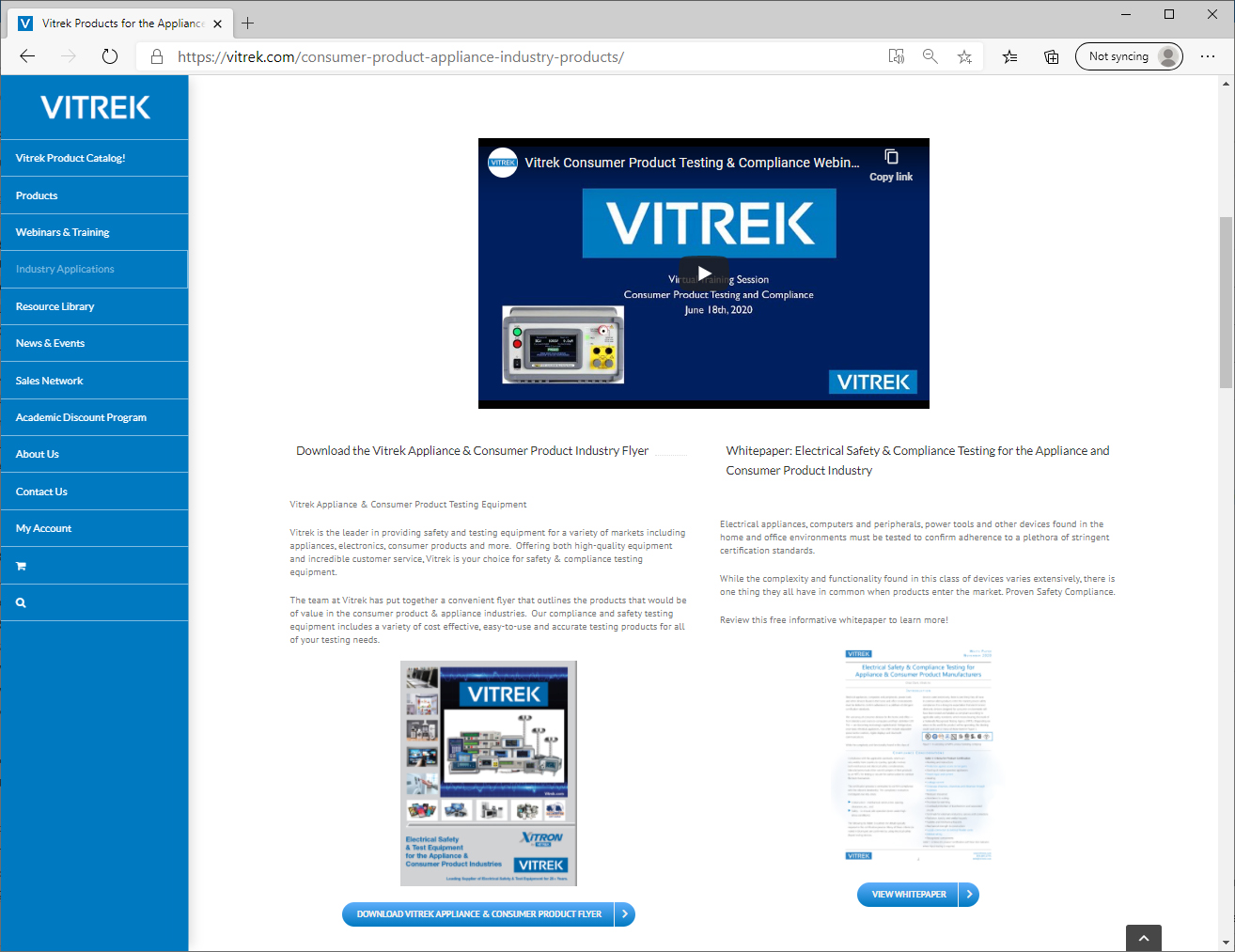
Vitrek Highlights Updated & Expanded Sections of their Website The innovative high voltage testing and measurement company offers numerous resources for their customers on their website vitrek.com. […]
Trigger Out Modification for CP500 Class Boards
Trigger Out Modification for CP500 Class Boards Customer Case Many A/D applications including Ultrasonics, Radar, Lidar, Hard Disk testing and CCD capture require maximal synchronicity between a trigger and the sampling clock. GaGe Case Solution GaGe now offers the TRIGGER OUT option as a means of synchronizing systems to the sampling clock on GaGe's CP500-class of A/D and scope cards, including CS8500, CS12100 and CS1250. The need for synchronicity can be understood by considering a typical ultrasonic pulse-echo system. An ultrasonic pulser-receiver generates ultrasonic pulses from a transducer which, microseconds later, receives echo signals reflected from a test specimen. [...]